Team Names for Meetings: Funny, Professional & Creative Ideas
A good meeting name makes invites easier to spot and easier to remember later. The right choice depends on the tone, who will see it, and whether it needs to work in a calendar invite, a chat channel, or both. Clear names usually age better, especially for recurring meetings.
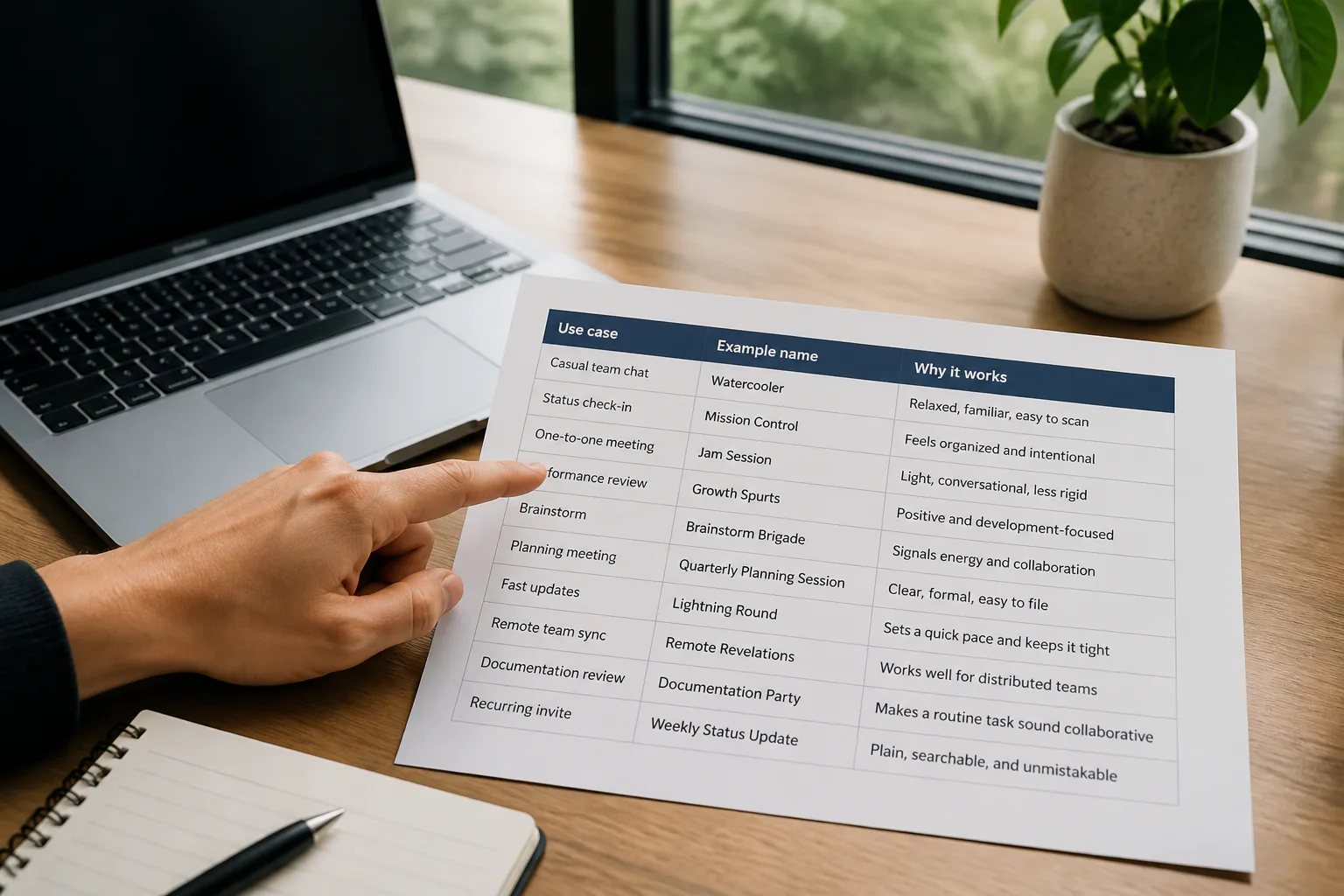
Meeting name examples by use case
|
Use case |
Example name |
Why it works |
|---|---|---|
|
Casual team chat |
Watercooler |
Relaxed, familiar, easy to scan |
|
Status check-in |
Mission Control |
Feels organized and intentional |
|
One-to-one meeting |
Jam Session |
Light, conversational, less rigid |
|
Performance review |
Growth Spurts |
Positive and development-focused |
|
Brainstorm |
Brainstorm Brigade |
Signals energy and collaboration |
|
Planning meeting |
Quarterly Planning Session |
Clear, formal, easy to file |
|
Fast updates |
Lightning Round |
Sets a quick pace and keeps it tight |
|
Remote team sync |
Remote Revelations |
Works well for distributed teams |
|
Documentation review |
Documentation Party |
Makes a routine task sound collaborative |
|
Recurring invite |
Weekly Status Update |
Plain, searchable, and unmistakable |
Funny meeting name ideas
Funny meeting names suit teams that already know the meeting’s purpose and want a little more personality in the title. They fit informal syncs, team rituals, and recurring internal meetings. Keep the joke easy to understand and appropriate for work.
-
Deadline Dodgers
-
Meeting Mavens
-
Snack Squad
-
Coffee Committees
-
Brainstorm Brigade
-
Pun Intended
-
Spreadsheet Superstars
-
Mission Impossible: Team Edition
-
This Meeting Could’ve Been an Email
-
The Deadline Dodgers
Playful names land best when everyone gets the reference. If the title is too obscure, people may not know whether it is a meeting, a project, or an inside joke. Humor works when it lowers resistance without making the invite harder to read.

Professional meeting name ideas
Professional meeting names work well for clients, leadership, and cross-functional groups that need clarity first. They can still sound friendly, but they should be concise and specific. That matters even more for recurring meetings that stay on the calendar for months.
-
Weekly Status Update
-
Quarterly Planning Session
-
Quick Sync
-
Daily Sync
-
Mission Control
-
Mission Possible: Team Edition
-
Creative Sparks Assembly
-
Mind Merge Lab
-
Quickfire Updates
-
Digital Espresso Break
The strongest professional names tell people what kind of meeting they are joining. Quick Sync and Daily Sync are plain and easy to scan, while Mission Control adds some energy without losing structure.
Names for channels and syncs
Channel names need to hold up over time because people search them, mute them, and return to them later. In Slack, Microsoft Teams, and Google Chat, short and specific names are easier to spot in a crowded sidebar. A clear name also makes recurring work conversations easier to find.
-
Watercooler
-
Mission Control
-
Weekly Status Update
-
Quickfire Updates
-
Remote Revelations
-
Ideation Oasis
-
Creative Sparks Assembly
-
Mind Merge Lab
-
Jam Session
-
Documentation Party
Pick a name that matches the conversation and stays easy to search later. In chat tools, vague titles disappear fast among similar threads. Workplace-appropriate wording also matters because channel names stay visible across teams and seniority levels.
How to pick the right name
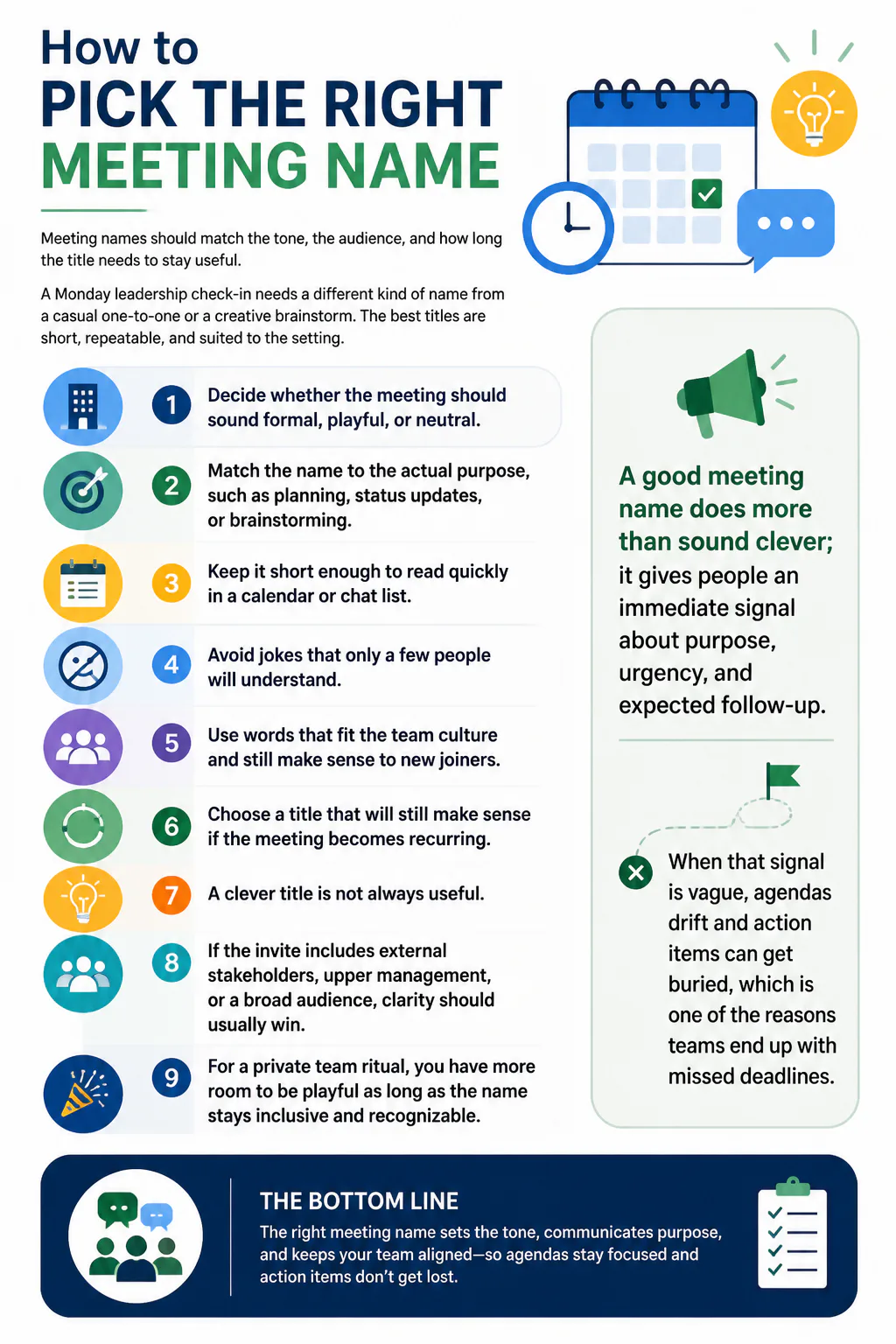
Meeting names should match the tone, the audience, and how long the title needs to stay useful. A Monday leadership check-in needs a different kind of name from a casual one-to-one or a creative brainstorm. The best titles are short, repeatable, and suited to the setting.
-
Decide whether the meeting should sound formal, playful, or neutral.
-
Match the name to the actual purpose, such as planning, status updates, or brainstorming.
-
Keep it short enough to read quickly in a calendar or chat list.
-
Avoid jokes that only a few people will understand.
-
Use words that fit the team culture and still make sense to new joiners.
-
Choose a title that will still make sense if the meeting becomes recurring.
A clever title is not always useful. If the invite includes external stakeholders, upper management, or a broad audience, clarity should usually win. For a private team ritual, you have more room to be playful as long as the name stays inclusive and recognizable.
A good meeting name does more than sound clever; it gives people an immediate signal about purpose, urgency, and expected follow-up. When that signal is vague, agendas drift and action items can get buried, which is one of the reasons teams end up with missed deadlines.
Common naming mistakes to avoid
Most bad meeting names fail for the same reasons: they are too vague, too private, or too cute to be useful. A title that seems funny to the organizer may mean nothing to everyone else. The point is to help people recognize the meeting quickly.
-
Using jokes that exclude new teammates
-
Picking names that sound childish in leadership settings
-
Making the title so long that it gets truncated
-
Using unclear abbreviations
-
Choosing names that do not match the meeting purpose
-
Repeating nearly identical names for different meetings
Another mistake is treating every meeting title like a branding exercise. One or two memorable names can add personality, but too many clever titles create clutter. When people need to search, file, or reuse the meeting later, plain language often does the job better.
FAQs
What makes a good meeting name at work?
A good meeting name is clear, short, and right for the audience. It should tell people what kind of conversation they are joining while still matching the team’s tone.
Should meeting names be funny or professional?
Funny names fit informal internal meetings. Professional names work better for leadership, client, or cross-team invites. If people outside the core team are included, clarity matters more than humor.
Can I use the same name for a recurring meeting?
Yes, and that usually helps. A recurring title like Weekly Status Update or Mission Control is easier to find, recognize, and keep consistent across calendars and chat tools.
What are good names for a one-to-one meeting?
Jam Session and Growth Spurts can work well because they sound conversational without feeling rigid. The best fit depends on whether the meeting is a casual check-in, coaching session, or performance conversation.
What should I name a brainstorm session?
Brainstorm Brigade, Creative Sparks Assembly, and Mind Merge Lab all fit brainstorm sessions. They suggest energy, collaboration, and open-ended thinking.
How do I name a meeting in Slack, Teams, or Google Chat?
Use a name that is easy to search and hard to confuse with other threads. Short, direct titles like Mission Control or Quickfire Updates are usually easier to manage than longer decorative ones.
In Slack, Teams, or Google Chat, the name you choose has to work within the broader flow of messages, files, and reminders. If the label is hard to scan or too similar to other threads, people waste time hunting for the right conversation, and that kind of workflow friction can make the tools themselves feel slower than they should.
What are some good casual channel names?
Watercooler, Digital Espresso Break, and Remote Revelations all suit casual conversation spaces. They fit best when the channel is for informal discussion rather than task tracking.
Bottom line
The best meeting name fits the audience, matches the purpose, and still sounds natural after the third or thirtieth invite. If you want a safe default, choose something clear. If you want more personality, keep it workplace-appropriate and easy to recognize.
The best meeting names are usually the ones people can recognize instantly and reuse without thinking. Once a team standardizes that habit, it becomes much easier to spot usage patterns, understand which meetings get attention, and identify where communication is working best.